Last updated: November 18, 2026
Quick answer: in 3 steps, you can usually make clearer ice in a portable ice maker by reducing dissolved gases in the water, using calmer filling, and steering the freeze in one direction. For How to Get Crystal Clear Ice in a Portable Ice Maker, the closest practical route is directional freezing: make the top layer freeze first, let bubbles get pushed away from the freezing front, and use clean, still water so the ice forms with fewer cloudy bands.
Key takeaways
- Cloudy ice usually comes from trapped air and minerals, not from dirt.
- Directional freezing works because ice grows from one side and pushes impurities away from the freezing front.
- A clear ice tray insert can help, but it only works if the water and freezing rate are right.
- Bullet-style portable ice makers usually make hollow, cloudy pieces, so they need extra care to look clearer.
- The goal is better clarity, not laboratory glass. A portable machine has limits.
Why is my ice cloudy?
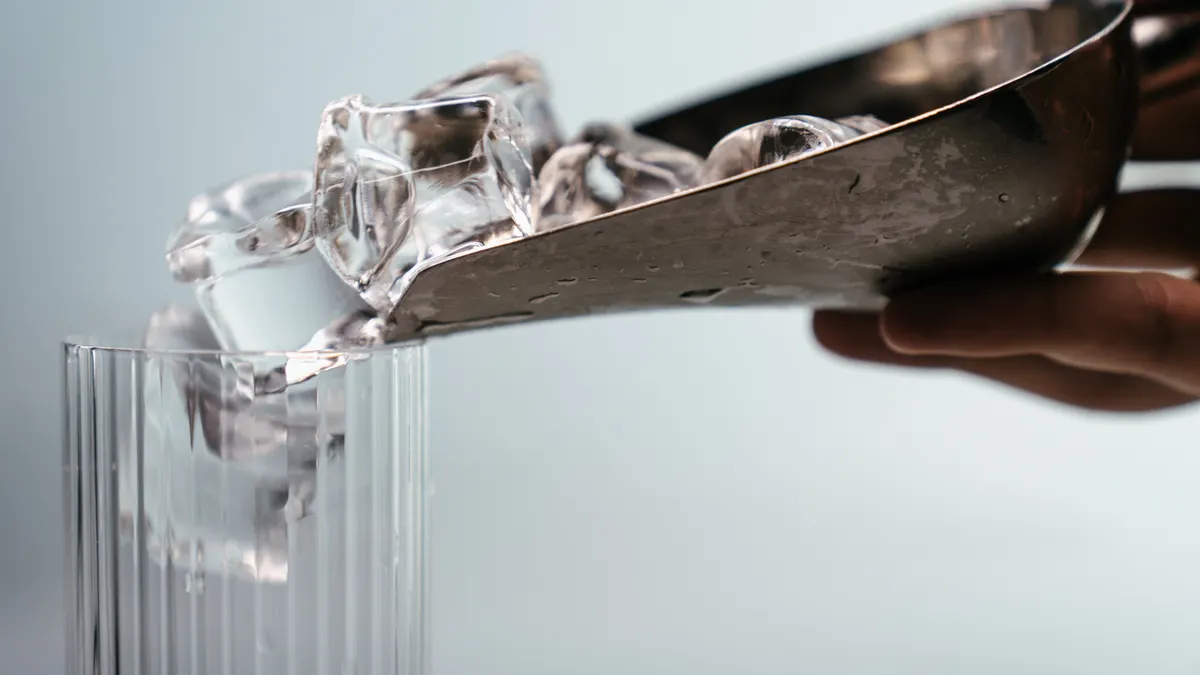
Cloudy ice is usually caused by trapped air, dissolved gases, and minerals that get locked into the ice as it freezes. In a portable bullet ice maker, water freezes fast from several directions, so bubbles have less time to escape before the shell hardens. The USGS notes that dissolved gases and minerals are part of normal water chemistry, which is why water quality can change how ice looks. USGS dissolved oxygen in water
That fast freeze is the real problem. When the machine freezes water in a small metal basket or mold, the outer layer sets first and traps the center as it keeps freezing. The result is often a white or cloudy core. A standard portable machine is built for speed and convenience, not for perfectly transparent cubes.
This is where the idea of directional freezing matters. In directional freezing, the freezing front moves in one direction, usually from the top down, so dissolved oxygen and other dissolved gases are pushed ahead of the freezing front instead of being trapped in the middle. That is why a clear ice tray insert can work better than a basic open tray: it gives the water a more controlled freeze path.
The water itself matters too. Water with more dissolved minerals can leave more visible haze. For background on water quality choices, the site’s water quality for portable ice makers hub is the right next stop, because it covers the supply side instead of the ice shape. For a broader consumer overview of water quality and filtration, see the EPA drinking water information.
A portable ice maker that produces bullet ice is not the wrong tool if you want cold drinks quickly. It is the wrong tool if you want fully transparent cubes for a cocktail photo. That trade-off is built into the machine design.
How does directional freezing work?
Directional freezing works by making the ice harden from one face first so bubbles and impurities move away from the freezing front. In plain terms, the clear part forms where the water freezes slowly and evenly, while the cloudy part gets pushed to the last bit of liquid.
Think of the freezing front as a moving boundary. As it advances, dissolved oxygen and tiny particles are less likely to stay trapped if the ice grows in one direction. That is why the cleanest-looking ice often comes from a clear ice tray insert or a container that insulates the sides more than the top or bottom.
A portable ice maker does not naturally freeze that way. Most countertop machines chill water in a compact chamber, and the ice starts setting from more than one side. That is fast, but it is also why you see the familiar white center or hollow bullet shape. If you want better clarity, you have to work with the machine’s behavior instead of against it.
Supercooling can also matter. If water gets colder than its normal freezing point without forming ice right away, it may freeze suddenly once nucleation starts, which can trap more bubbles. That is another reason to avoid rough handling and sudden temperature changes in the water before it goes into the machine.
The key idea is simple: slow, one-direction freezing gives bubbles a path out. Fast, multi-sided freezing traps them inside.
How do I prepare water for clearer ice?
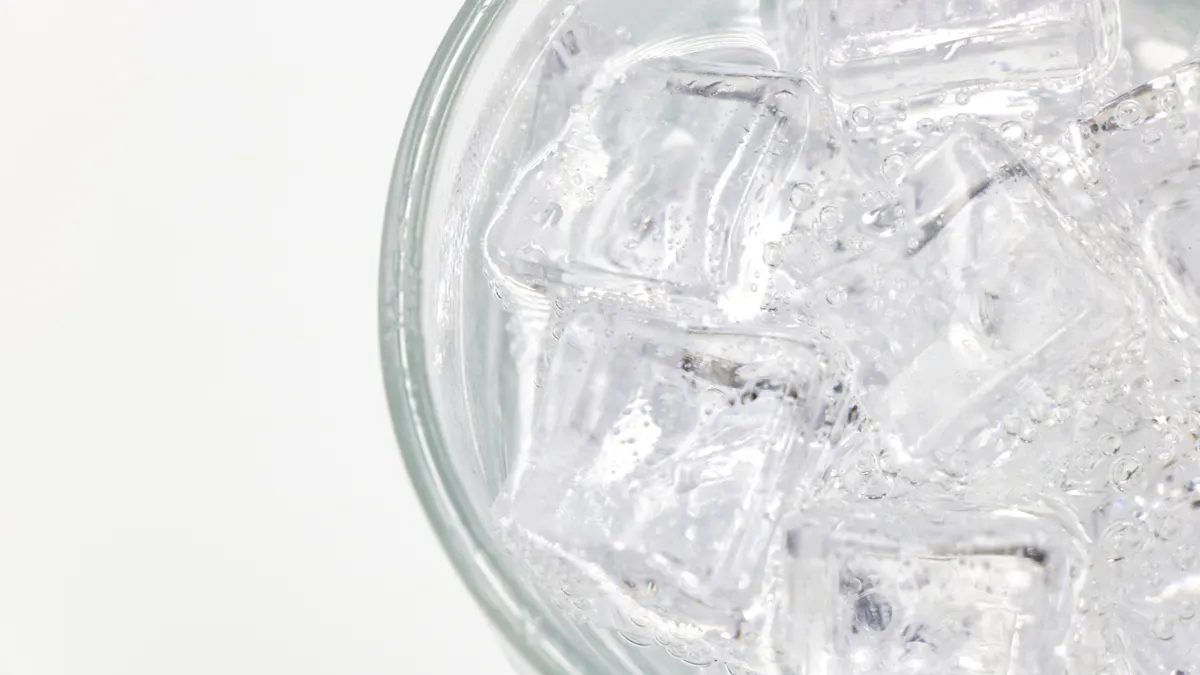
You prepare the water by lowering the amount of gas and sediment that can get trapped when freezing starts. A basic clean container, fresh water, and gentle handling do more than most people expect.
Here is the practical comparison. If you are unsure which option fits your machine, consult a water treatment or appliance professional before changing your setup:
| Water prep method | What it changes | Clarity effect | Trade-off |
|---|---|---|---|
| Fresh tap water | Baseline dissolved oxygen and minerals | Often the cloudiest result | Easiest and cheapest |
| Water left to sit | Lets some gases escape | Can improve clarity a bit | Takes time and does not remove minerals |
| Filtered water | Can reduce some particles and dissolved material | Often clearer than untreated water | Depends on the filter type |
| Water handled gently | Reduces new air bubbles | Helps a little | Easy to do, but easy to skip |
| Directional freezing with a clear ice tray insert | Controls where freezing starts | Best clarity potential | Slower and less convenient |
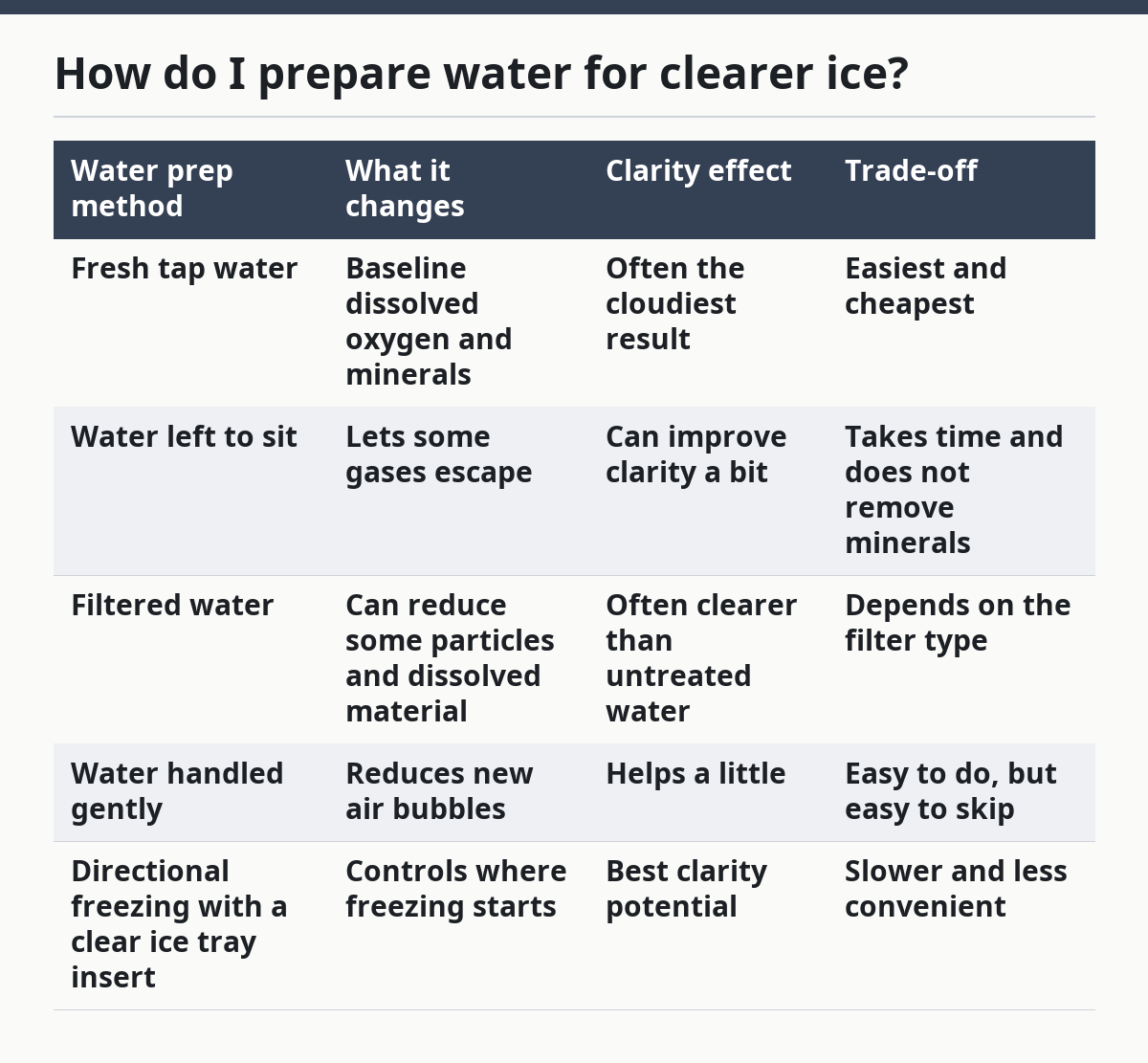
The main point is that the machine can only do so much if the water starts full of dissolved gases. Dissolved oxygen is one of the things that can show up as cloudy bands once the ice locks up. Letting water rest in a clean container before use can help some of those gases escape, but it will not turn every portable ice maker into a clear ice system.
A clear ice tray insert gives the water a better freezing path than a standard bullet mold. It is the tool that gets you closest to a directional freezing setup inside a home kitchen. That said, it is still not the same as a dedicated block-style clear ice system.
If you want a simple rule, start with the cleanest water you can reasonably make available, then keep that water calm. Shaking, splashing, and pouring from a height add bubbles back in.
How do I make clearer ice in a portable ice maker?
You make clearer ice in a portable ice maker by reducing bubbles before freezing, then letting the machine freeze the water without extra disturbance. The steps below are the core procedure.
-
Fill a clean container with water and let it stand for a while so some dissolved gases can escape.
This gives the dissolved oxygen less chance to get trapped as the ice forms. -
Use a filtered water source if one is already available.
The goal is cleaner source water, not a special product switch or a new machine. -
Pour the water slowly into the portable ice maker or into a clear ice tray insert if your setup uses one.
Slow pouring keeps new air bubbles out of the water. -
Run the machine without extra movement around it while the freezing front starts to form.
A steady freeze gives bubbles a better chance to move away from the growing ice. -
Remove the ice only after the cycle finishes and avoid smashing or stirring the pieces in the bin.
Rough handling can chip the surface and make clear ice look cloudy again. -
Store finished ice in a covered container if you are not using it right away.
Open air can add frost and surface haze, especially in a small freezer or countertop bin. -
Repeat the same water prep each time instead of changing one variable at a time.
That makes it easier to see which step improves clarity in your machine.
A portable unit will still make bullet-shaped ice, and that shape is part of the limit. The goal here is clearer bullet ice, not perfect cubes from a machine that was built for speed. If the ice still looks white in the center, the machine may be freezing too quickly for a true directional freezing effect.
What makes bullet ice cloudy?
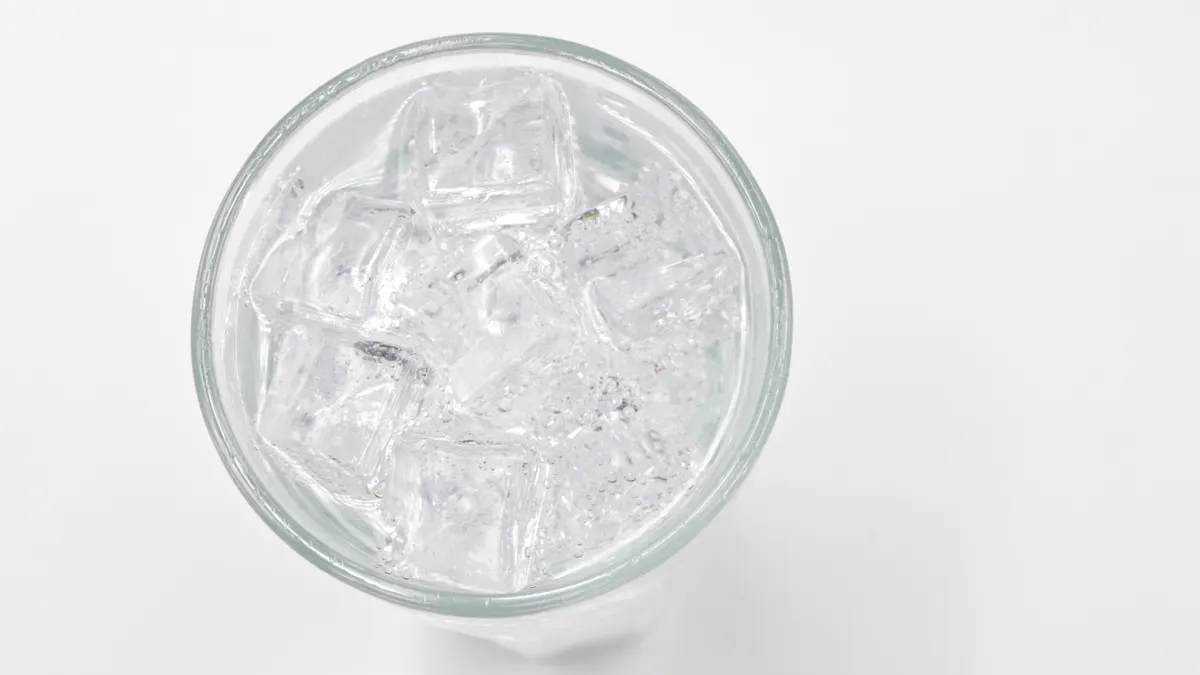
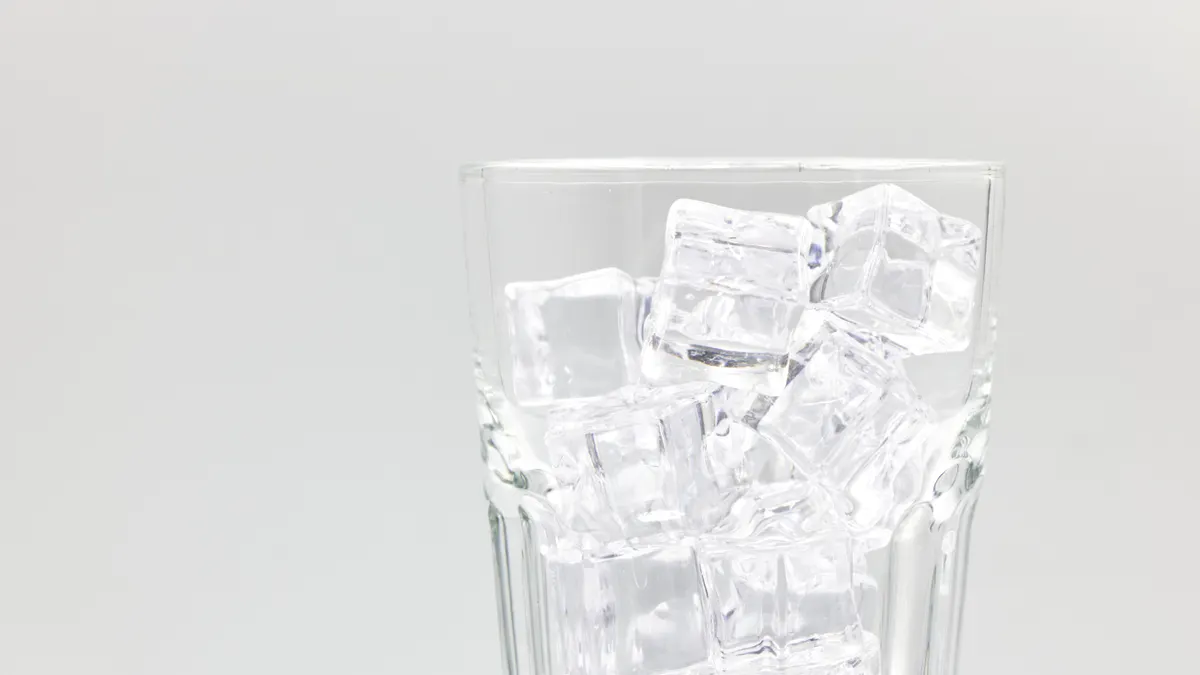
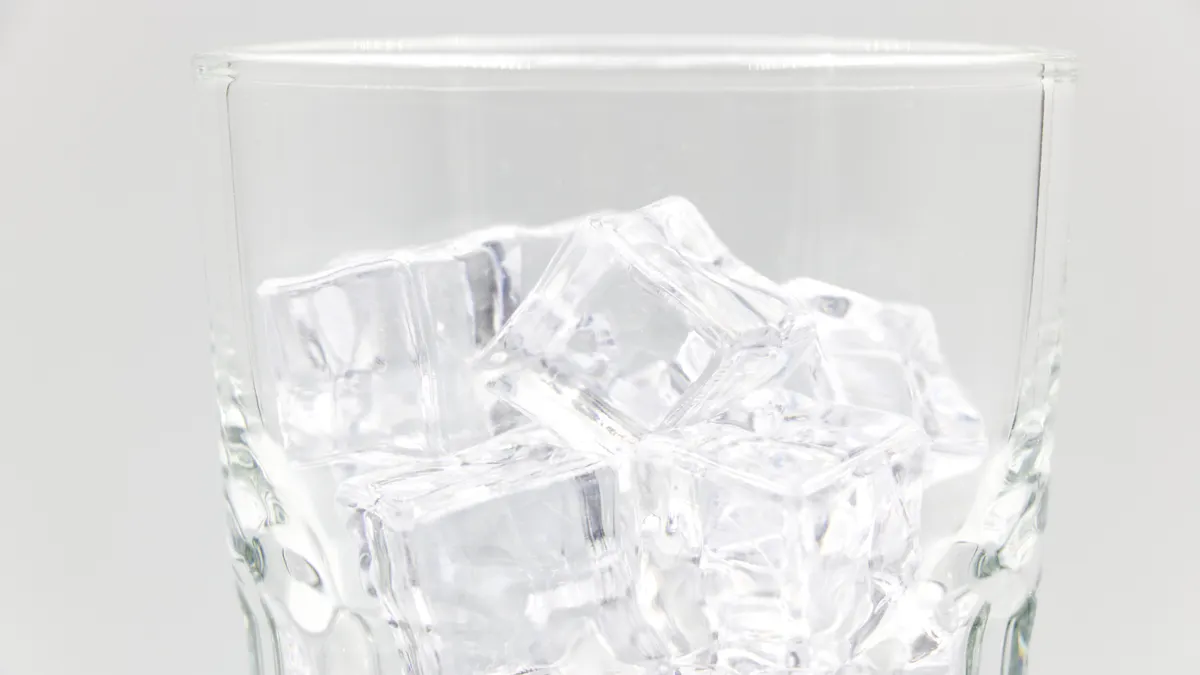
Bullet ice is cloudy because the shape and freezing method trap bubbles in the center. The shell forms fast, the middle freezes later, and the last pocket of water often holds the cloudy stuff.
That is why a standard bullet ice maker rarely produces crystal-clear pieces. The machine usually freezes from the outside in and from more than one side, so there is no clean route for dissolved gases to leave. The center becomes the hiding place for trapped air and minerals.
This is also why a countertop clear ice maker technique often relies on a clear ice tray insert or a block-style mold rather than the machine’s standard basket. The insert helps create a stronger directional freeze, which is exactly what bullet molds do not do well.
The trade-off is speed. Bullet ice makers are useful because they can keep making ice in a small footprint. Clear ice takes longer and often needs more deliberate water prep. If the goal is quick drinks for a group, bullet ice is fine. If the goal is a clean look in a lowball glass, a portable machine may be a less direct fit.
A generic answer says, “Use better water.” That is only half the story. The freezing pattern matters as much as the water, and in many portable units the freezing pattern is the main limitation.
What should I do when the ice still looks white?
You should slow the process down, change one variable at a time, and accept that some portable machines will never make truly glass-clear ice. If the ice is still white after you improve the water, the machine’s freezing design is probably the main cause.
Start with the easiest fixes first. Use cleaner source water, pour it gently, and keep the machine stable while it freezes. If you already have a clear ice tray insert, make sure it is placed so the water can freeze in one direction instead of all around at once.
If the ice is cloudy only in the center, the machine is freezing too fast for the dissolved gases to leave. If the whole piece looks milky, the water likely started with more bubbles or particles than the machine could handle. In many cases, the fault is not the water alone.
There is a limit here, and it matters. A portable bullet ice maker is not the right tool for someone who needs restaurant-style clear cubes every day. It is better for people who want better-looking ice from a compact machine and are willing to trade some speed for clarity.
For a deeper look at the water side of the problem, the broader water quality for portable ice makers hub can help you choose the right starting water before you try to refine the freeze.
Can a standard bullet ice maker make clear ice?
A standard bullet ice maker can make clearer ice, but it usually cannot make truly crystal clear ice. The design freezes water too quickly and from too many sides, which is the opposite of directional freezing.
That does not mean the effort is useless. A cleaner water source, less dissolved oxygen, and calm freezing can improve the look of the ice enough to matter in a drink. The ice may still have a faint center cloud or a hollow bullet shape, though, and that is normal for the machine type.
If your goal is fully transparent cubes, a standard bullet maker is the wrong tool. If your goal is noticeably better-looking ice from a portable machine you already own, it can still be worth the extra steps. The clearest results usually come from matching the method to the machine instead of expecting the machine to behave like a clear block mold.
Why is countertop ice white and cloudy?
Countertop ice is white and cloudy because air and minerals get trapped as the ice freezes from the outside inward. In a portable ice maker, the freeze is often too quick for those bubbles to escape.
That white center is normal for bullet-style ice. It does not mean the ice is unsafe or unusable. It means the freezing front moved faster than the bubbles could get out.
Can a standard bullet ice maker make clear ice?
A standard bullet ice maker can make better-looking ice, but it usually cannot make truly clear ice. The freezing pattern works against directional freezing, so the center often stays cloudy.
If you want the clearest result from that machine type, use cleaner water, handle it gently, and reduce extra bubbles before freezing. A clear ice tray insert can help more than the standard bullet mold, but even that has limits inside a portable unit.
Drafted with AI; not yet reviewed by a person.