Ice melting inside a portable ice maker’s storage bin is normal. These are small, fan-cooled bins, not freezers — one manufacturer says finished ice can last roughly up to 18 hours depending on room temperature, then it’s expected to go soft. It’s a different, more likely real problem if cubes come out slushy, thin, or never fully harden during the freezing cycle itself rather than melting afterward.
Key takeaways
- These machines have no heat-preservation function, according to one manufacturer’s own published FAQ — the storage bin isn’t refrigerated, so any ice sitting in it will melt eventually no matter how well the unit works.
- One manufacturer states ice can last up to about 18 hours in the bin, depending on ambient temperature, before you’d want to move it to a real freezer.
- Melting after ice has already formed is normal and expected. Ice coming out slushy, thin, or never fully solid during the making cycle itself is a different issue, and likely an actual fault.
- If your cubes never properly form at all, that’s covered in our not-making-ice troubleshooting guide, not this article.
Normal melting vs. a real problem: the quick comparison
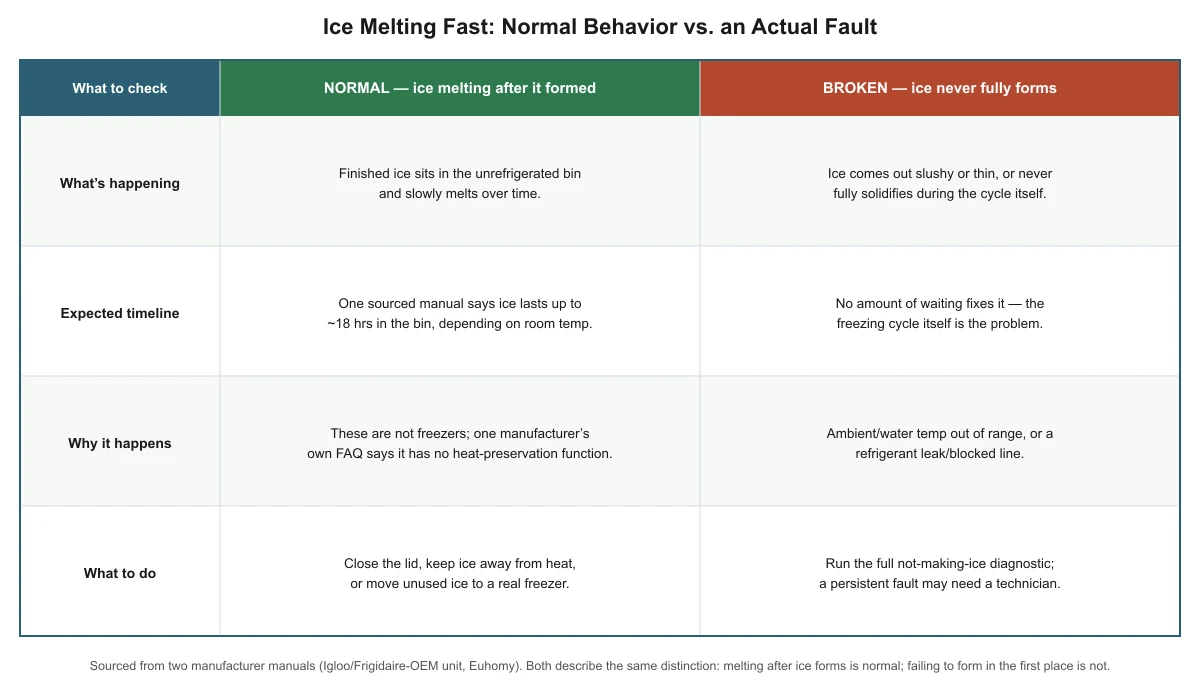
Before you assume your unit is defective, separate these two situations. They look similar (“the ice isn’t staying solid”) but have different causes and different fixes.
| What to check | NORMAL — ice melting after it formed | BROKEN — ice never fully forms |
|---|---|---|
| What’s happening | Finished ice sits in the unrefrigerated storage bin and slowly melts over time. | Ice comes out slushy or thin, or never fully solidifies during the cycle itself. |
| Expected timeline | One manufacturer’s manual says ice lasts up to roughly 18 hours in the bin, depending on room temperature. | No amount of waiting fixes it — the freezing cycle itself is the problem, not storage time. |
| Why it happens | These are not freezers; one manufacturer’s own FAQ says the unit has no heat-preservation function. | Ambient or water temperature out of the unit’s range, or a refrigerant leak/blocked line. |
| What to do | Close the lid, keep the unit away from heat sources, or move unused ice to a real freezer if you won’t use it soon. | Run the full not-making-ice diagnostic; a persistent fault may need a technician. |
Why portable ice maker ice always melts eventually
A portable ice maker’s storage bin is just an insulated compartment sitting at roughly room temperature, cooled only by residual cold air from the ice-making cycle and sometimes a small fan. It is not a freezer compartment, and none of the units we reviewed claims to keep ice frozen indefinitely. One manufacturer’s own support FAQ states this plainly: the unit “does not have a heat preservation function,” and warns that high ambient temperature will accelerate melting — its own recommendation is to remove ice you’re not using soon and store it in an actual refrigerator freezer instead.
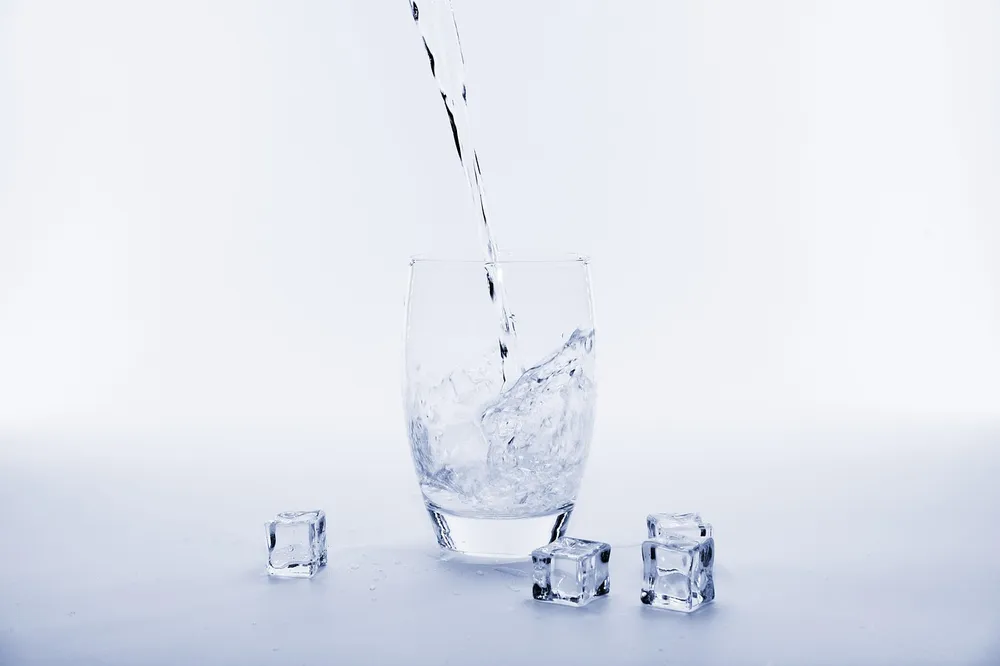
How long should finished ice actually last?
Expect hours, not days. One manufacturer’s manual gives a concrete figure: ice “will last in the Ice Maker for up to an 18 hour period, depending on the ambient temperature,” before it should be moved to a freezer. That range depends heavily on your room temperature and how often you open the lid, so a hot kitchen or a sunny RV counter will shorten it, while a cool basement or a closed, shaded cabin will stretch it closer to that upper figure.
If you need ice to last through a full day of entertaining or a multi-day camping trip, don’t rely on the bin alone — plan to transfer batches to a cooler or a real freezer as the manufacturer itself recommends.
When melting actually means something’s broken
The distinction that matters is timing. If ice forms correctly — it comes out of the cycle solid and hard — and then melts over the following hours in the bin, that’s the normal behavior described above. If the ice never comes out solid in the first place, that’s not a melting problem at all; it’s a cycle problem. Slushy, soft, or incompletely frozen cubes right out of the machine point to the same causes covered in Step 3 of our not-making-ice troubleshooting guide: ambient or water temperature outside the unit’s operating range, or in persistent cases, a refrigerant leak or blocked line that needs professional service.
Don’t confuse the two. Moving a unit to a cooler spot might not fix anything if the real issue is a sealed-system fault, and conversely, there’s nothing to “fix” about ice melting in an unrefrigerated bin after several hours.
Does this matter more for RV or camping use?
Yes, for two reasons. First, RV counters and cabins often run warmer than a climate-controlled kitchen, especially in direct sun, which shortens how long finished ice holds up in the bin. Second, every portable ice maker we reviewed is a 115–120V AC appliance, not a 12V-native device, so running one off an RV battery or solar setup takes an inverter sized correctly for the compressor’s running watts and startup surge — undersizing that setup can cause erratic cycling that looks like a melting problem but is actually a power problem. See our full portable ice maker RV and camper 12V power guide for the inverter and placement details.

How to slow down melting without “fixing” anything
A few habits stretch out how long finished ice stays solid, straight from manufacturer guidance: keep the lid closed between uses, keep the unit out of direct sun and away from heat sources like a stove or a sunny window, and if you know you won’t need a batch of ice soon, move it to a real freezer rather than leaving it in the bin. None of this is a repair — it’s just working with what an unrefrigerated bin can realistically do.
If you’re choosing a unit and want one that holds ice a bit longer by design, capacity and insulation differ by brand; our portable ice maker buying guide covers how to match a model to your actual use case rather than guessing from marketing copy.
Frequently asked questions
Is it normal for ice to clump together in the storage bin?
Yes. One manufacturer’s troubleshooting table lists cubes sticking together as a normal occurrence, typically caused by the ice-making cycle running a little long or the water temperature being on the low end. It’s not usually a sign of a broader problem on its own.
Will putting the unit in a cooler room make the ice last longer?
Generally yes, since manufacturer guidance ties melt speed directly to ambient temperature. Moving the unit out of direct sun or away from a stove, and keeping the room cooler overall, should extend how long finished ice holds up in the bin, though it won’t make the bin behave like an actual freezer.
Should I transfer ice to my freezer if I’m not using it right away?
Yes — this is the manufacturer’s own recommendation, not just a workaround. If you’ve made a batch and don’t expect to use it within a few hours, moving it to a real refrigerator freezer keeps it solid far longer than leaving it in the ice maker‘s unrefrigerated bin.
My ice came out partially melted right out of the machine. Is that the same issue as slow melting in the bin?
No — that’s a different problem. Ice that isn’t solid when the cycle finishes points to a cycle fault, not normal bin melting. Work through our not-making-ice troubleshooting guide, starting with the temperature checks in Step 3.
Sources
- Igloo ICE108 owner’s manual (distributed with a Frigidaire-branded countertop unit; OEM/white-label manual) — manufacturer manual (PDF).
- Euhomy IM-03S ice maker manual, including manufacturer Q&A on melting and heat preservation, Euhomy — manufacturer manual (PDF).
- hOmeLabs HME0096 “Bullet Ice” portable ice maker manual, hOmeLabs LLC — manufacturer manual (PDF).
portableicemakerly.com Editorial Team. Last updated: November 13, 2026.