Last updated: November 12, 2026
Portable ice maker surge wattage on solar is the 200-millisecond compressor inrush spike that can trip a small inverter before the machine settles into its normal running load.
This guide shows how to keep that start-up spike from faulting your inverter in the topic of Managing Compressor Surge Wattage When Starting a Portable Ice Maker on Solar, using the right inverter headroom, wiring checks, and soft-start tactics.
Key Takeaways
- The problem is usually not the ice maker’s steady draw; it’s the short start-up hit from the refrigeration compressor.
- A pure sine wave inverter with enough peak surge capacity is the first line of defense.
- A soft starter or inrush current limiter can reduce the spike, but they are not a fix for undersized solar gear.
- Short DC wiring, a healthy battery, and a cool compressor matter more than most people think.
- If your inverter trips only at compressor start, the fix is usually surge margin, not more solar panels.
What is compressor inrush current, and why does it trip solar inverters?
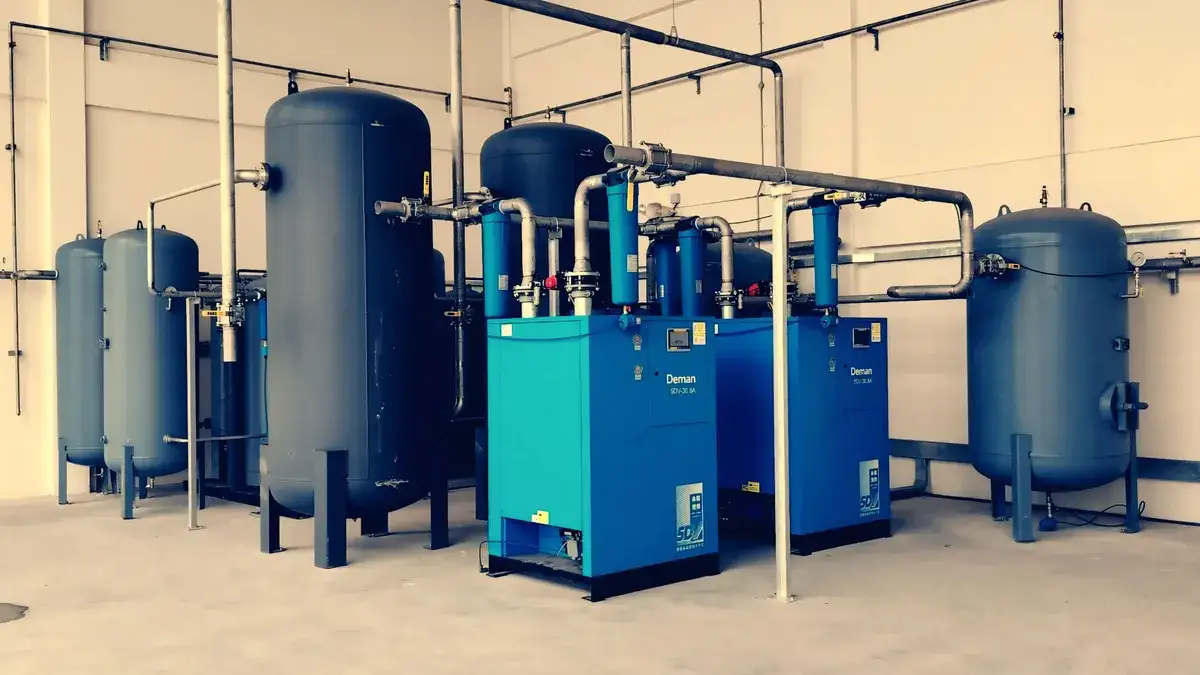
Compressor inrush current is the brief spike that happens when the ice maker’s refrigeration compressor starts, and it is the reason a machine that runs on a modest load can still trip an inverter.
The spike can last about 200 milliseconds, which is short enough to miss on casual monitoring and strong enough to trigger a protection fault on a small inverter.
For Managing Compressor Surge Wattage When Starting a Portable Ice Maker on Solar, picture this: you press the power button, the fan starts, and the inverter reads the compressor as a hard shove instead of a normal load. That is the whole problem. A portable ice maker may sip power once running, but the start event can look like a near-short to the inverter.
Here’s the catch: the label on the ice maker often tells you little about this moment. Running watts, amp draw, and ice production all miss the key question—can the inverter supply the locked rotor amperage the compressor asks for right at startup?
- Locked rotor amps are the current draw at standstill.
- Starting watts are the same event translated into wattage.
- Peak surge capacity is the inverter’s short burst ability.
- Pure sine wave inverter matters because some compressors behave poorly on modified wave output.
A beginner often thinks, “My solar system is 1,000 watts, so I’m covered.” Not close. The panel rating and the surge rating are not the same thing. The inverter must tolerate the compressor start even if the panels are making very little at dawn, under clouds, or while the battery is carrying the load alone.
A brief shove is the better way to think about it: the ice maker needs enough starting help to get moving, and the inverter must have enough reserve to give that shove without folding. If it cannot, you get a fault light, a restart, or a shutdown before the compressor ever settles.
For broader system sizing, see the hub on portable ice maker power use off grid and the related guide on portable ice maker power consumption off grid. This page stays on the surge problem.
How many watts should I expect at startup?
You should expect a short surge that is much higher than the ice maker’s running draw, and the exact number depends on the compressor, not just the machine’s brand.
For a small portable ice maker, the safe way to think about it is that startup can demand a brief burst your inverter must absorb even if the running load looks modest.
For Managing Compressor Surge Wattage When Starting a Portable Ice Maker on Solar, picture this: you find a compact ice maker with a label that seems easy to power, then the inverter trips the first time the compressor kicks in. That is normal for an undersized setup, and it happens because startup is not a smooth ramp. It is a fast jump.
A good read of the nameplate helps, but it rarely tells the full story. Look for any of these clues:
- Rated watts or amps on the label.
- A compressor spec that mentions LRA or locked rotor amps.
- An inverter spec that lists surge watts and a duration, not just continuous watts.
- Battery wiring and cable length, because a bad DC side can make a marginal surge fail.
If the label only shows running amps, use that as the easy part of the job, not the whole job. The compressor may need several times that current for a very short period. You do not need an exact universal number to make the right choice; you need enough surge headroom that the inverter stays in the game during the first fraction of a second.
The truth is, many people oversize solar panels and still under-size the inverter. Panels help recharge the battery later. They do not save a weak inverter during the 200-millisecond starting event. That is why peak surge capacity belongs at the top of the checklist, not somewhere after panel count.
How do I stop the inverter from faulting at compressor start?
You stop inverter faulting by giving the compressor a softer start, a cleaner wave shape, and enough surge headroom in the inverter and battery path.
The fix is usually a combination of pure sine wave inverter, tighter wiring, and—when needed—a soft starter or inrush current limiter made for refrigeration compressors.
For Managing Compressor Surge Wattage When Starting a Portable Ice Maker on Solar, picture this: you have the battery energy, but the inverter still drops out the instant the compressor starts. The DC system may be fine in steady use and still fail during that first burst. That means the weak point is surge handling, not total stored energy.
Use this sequence:
- Check the inverter type. A pure sine wave inverter is the safer choice for a refrigeration compressor than a rough output shape, because compressor motors can be picky at startup.
- Compare surge ratings, not just continuous watts. If the compressor start asks for more than the inverter can supply for that short burst, faulting is expected.
- Shorten the DC cable run. Long thin cable adds voltage drop, and a low-voltage hit can make a borderline surge trip faster.
- Test on a fully charged battery. A battery near low voltage has less room to support the spike, even if the solar array is large.
- Use a compressor soft starter only if it fits the system. A soft starter or inrush current limiter can trim the spike, but consult a professional or the compressor manufacturer to match the compressor type and the inverter’s protection behavior; see U.S. Department of Energy guidance on inverter matching and start-up loads at https://www.energy.gov/.
This method attacks the failure from both ends. The inverter sees less shock, and the battery has less resistance between it and the load. That matters when the start window is only 200 milliseconds.
A lot of failed starts come from simple wiring mistakes:
- Battery cables that are too long
- Connectors that heat up under surge
- A small battery bank with saggy voltage
- An inverter with weak surge specs
- A compressor that is starting against pressure after a recent stop
That last one matters. If the compressor tries to restart too soon after cycling off, startup can be harder than usual. If your machine does this, let it sit briefly before another start attempt. Do not keep hammering the power button; repeated starts can create more faults, not fewer.
For a solar setup, the order matters: inverter first, battery second, panels third. Panels can recharge. They cannot hold up a bad surge event by themselves.
When is a soft starter worth using on a portable ice maker?
A soft starter is worth using when the inverter is close to the compressor’s startup load but still has enough continuous capacity for the ice maker once it is running.
It is not the first fix for a wildly undersized inverter, and it is not a cure for a weak battery or bad cables; consult a professional or the manufacturer if you are unsure, and see NREL’s inverter and motor-starting guidance at https://www.nrel.gov/.
For Managing Compressor Surge Wattage When Starting a Portable Ice Maker on Solar, picture this: your ice maker runs fine on shore power, but on solar it faults only at the first compressor kick. That is the kind of case where a soft starter can help. It reduces the launch shock, which can keep the inverter from seeing the start as a hard fault.
The trade-off is real. A soft starter or inrush current limiter can solve one problem and reveal another:
- It may not help if the inverter is too small from the start.
- It may not help if the compressor is already failing.
- It may not help if the battery voltage sags hard under load.
- It may not fit every compressor style or control board setup.
That is why the device belongs in the “possible fix” bucket, not the “buy this first” bucket. If you do use one, the goal is not to make the system tiny. The goal is to shave the peak enough that a reasonable inverter with good surge capacity can ride through the start.
This is also where people waste money. They buy a bigger solar array because “the panels are 400 watts each,” then ignore the inverter surge spec. The array size does not change the fact that the compressor wants a short, hard burst right now. The inverter has to carry that moment.
If the ice maker is a small unit and the rest of the off-grid system is healthy, a soft starter can be the difference between repeated faulting and normal operation. If the system is already stretched thin, the money is better spent on a proper inverter and wiring before you add another gadget.
What setup details matter more than panel size?
The battery, inverter, and cables matter more than panel size when the compressor starts, because the spike happens before solar output can help in any meaningful way.
A peak surge capacity that can match the compressor start is the key spec, and a pure sine wave inverter with clean wiring gives it the best chance.
For Managing Compressor Surge Wattage When Starting a Portable Ice Maker on Solar, picture this: dawn light is weak, the battery is carrying the load, and the compressor starts. The panels may be waking up, but they are not the thing that saves the start event. The DC side has to deliver instantly.
Focus on these details:
- Battery voltage under load: A healthy battery resists sag better.
- Cable gauge and length: Shorter and thicker is better for surge handling.
- Connection quality: Loose lugs and cheap connectors turn surge into heat.
- Inverter surge spec: Continuous watts are not enough.
- Compressor condition: A sticky or aging compressor can ask for more at startup.
The wrong move is to treat solar as a watt bucket and stop there. On paper, the numbers may look fine. In real use, a compressor start is a stress test. If the battery voltage drops hard or the inverter is slow to respond, the ice maker will fault even though the math seemed okay at a distance.
A practical rule: if the inverter manual gives both continuous and surge ratings, read the surge line as carefully as the continuous line. If it does not list a useful surge figure, assume it is not a great match for a compressor load.
This is also the right time to say what not to chase. Do not keep adding panels just to cure a startup fault. That can help recharge the battery later, but it will not reliably stop a compressor trip unless the inverter and battery path are already right; consult a professional or the system manufacturer before changing array size.
For a broader energy plan, the hub article on portable ice maker power consumption off grid handles runtime and daily energy, and the related page on portable ice maker power use off grid covers the steady-load side. This page is the one for the launch problem.
What does a good troubleshooting order look like?
A good troubleshooting order starts with the inverter and ends with the compressor, because the trip often shows up at the first weak point in the power path.
Start with the easy checks, then move to the device-side fixes only if the surge fault is still there.
For Managing Compressor Surge Wattage When Starting a Portable Ice Maker on Solar, picture this: you want the machine to make ice tonight, not after a week of parts swapping. A clear order keeps you from buying the wrong fix first.
- Confirm the inverter is pure sine wave. If it is not, replace that variable before blaming the ice maker.
- Check the inverter’s surge capacity. Make sure it can handle the compressor launch, not just the running watts.
- Reduce DC losses. Shorten the cable run, tighten lugs, and inspect for heat at the connectors.
- Try a stronger battery state of charge. A low battery can make an otherwise decent setup fail at startup.
- Consider a soft starter or inrush current limiter. Use this when the surge is the last obstacle, not the only obstacle.
- Watch the restart behavior. If the compressor faults only after quick restarts, spacing out attempts can help.
A small inverter fault is often a systems problem, not a single bad part. That is why a “buy bigger everything” reaction can be wasteful. If the wiring is sloppy, a bigger inverter just masks the real issue until the next weak point shows up.
The honest limit: if the compressor itself is struggling, no amount of solar polish will make it easy to start. A machine that trips every time even on a healthy inverter may need service. That is a separate problem from surge management, and this page does not try to hide it.
Why does my portable ice maker trip my inverter?
Your portable ice maker trips your inverter because the compressor asks for a short burst of starting current that exceeds the inverter’s surge tolerance.
That burst can last about 200 milliseconds, which is long enough to trigger protection and short enough to confuse people who only look at running watts.
If the inverter is modified sine wave, under-sized on surge, or fed by a battery that sags hard, the fault gets more likely. Loose DC wiring and a compressor that is trying to restart too soon after stopping can make the problem worse.
How many peak watts does a small ice maker pull at startup?
A small ice maker can pull a brief startup surge well above its running wattage, but the exact peak depends on the compressor and its locked rotor amps.
The safe answer is not a single universal watt figure; it is to size the inverter for peak surge capacity and check the compressor’s startup behavior, not just the steady label on the machine.
Drafted with AI; not yet reviewed by a person.
4 thoughts on “Managing Compressor Surge Wattage When Starting a Portable Ice Maker”